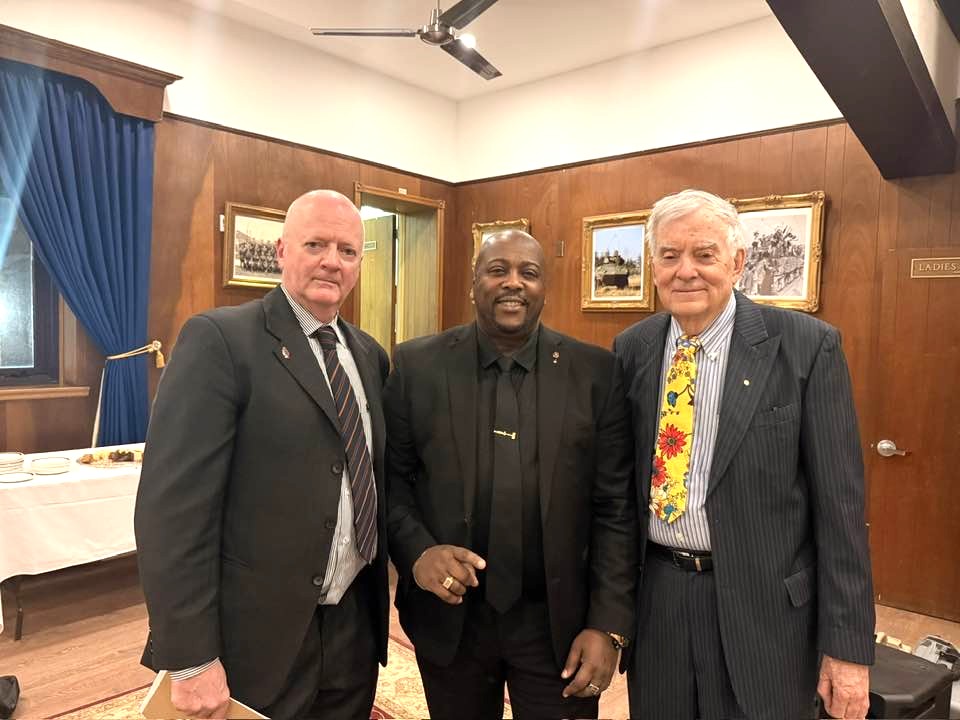
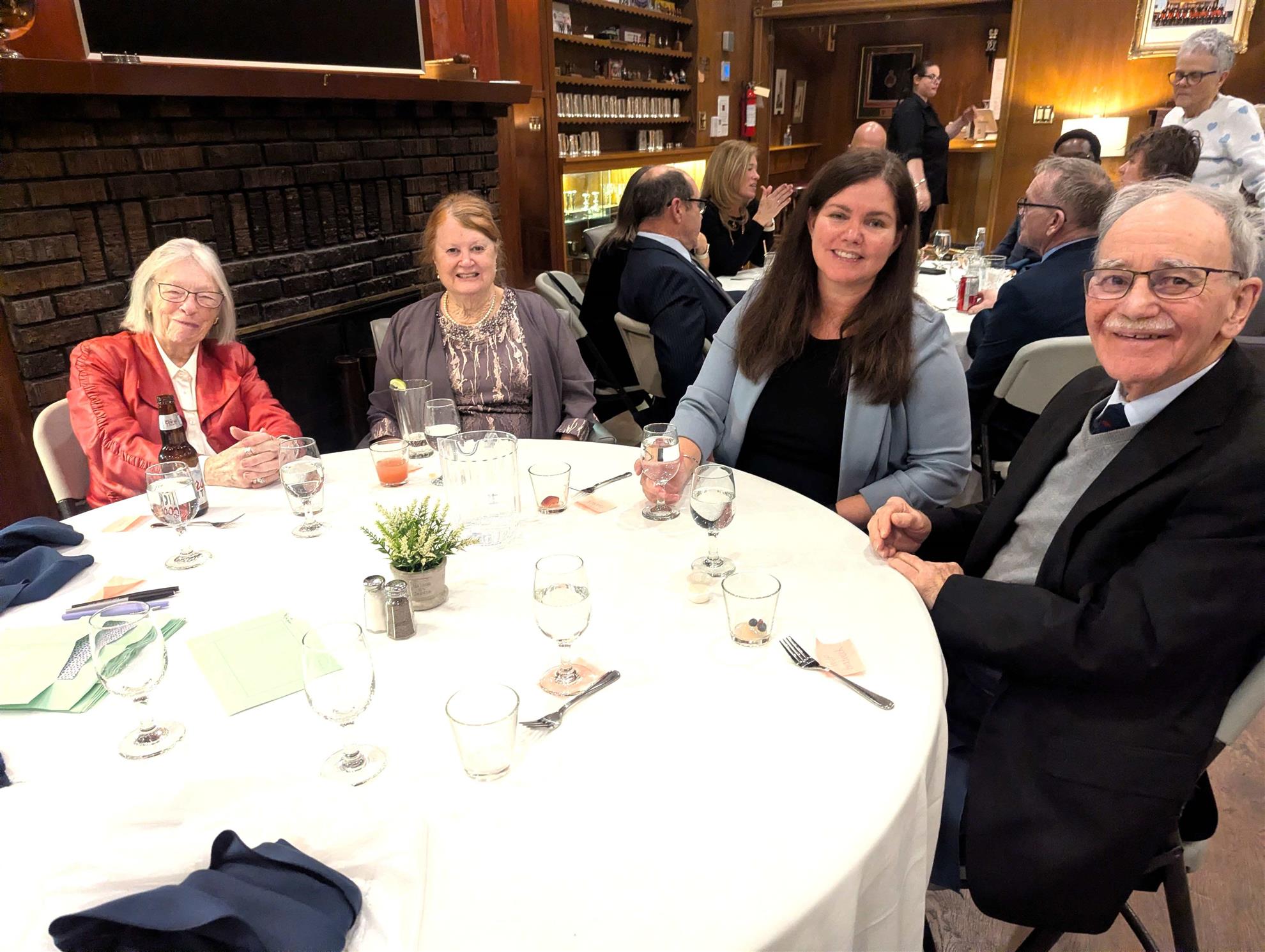
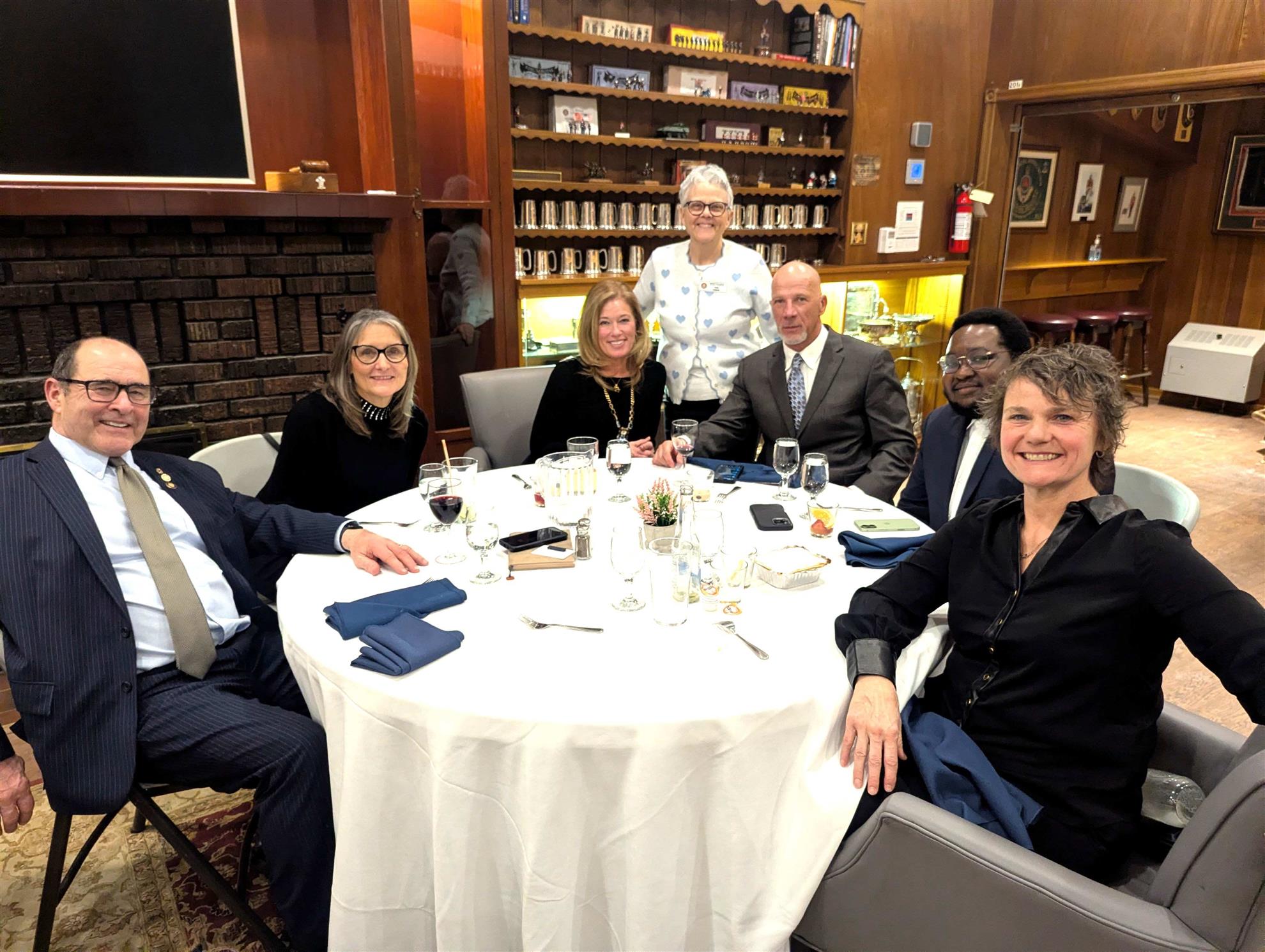
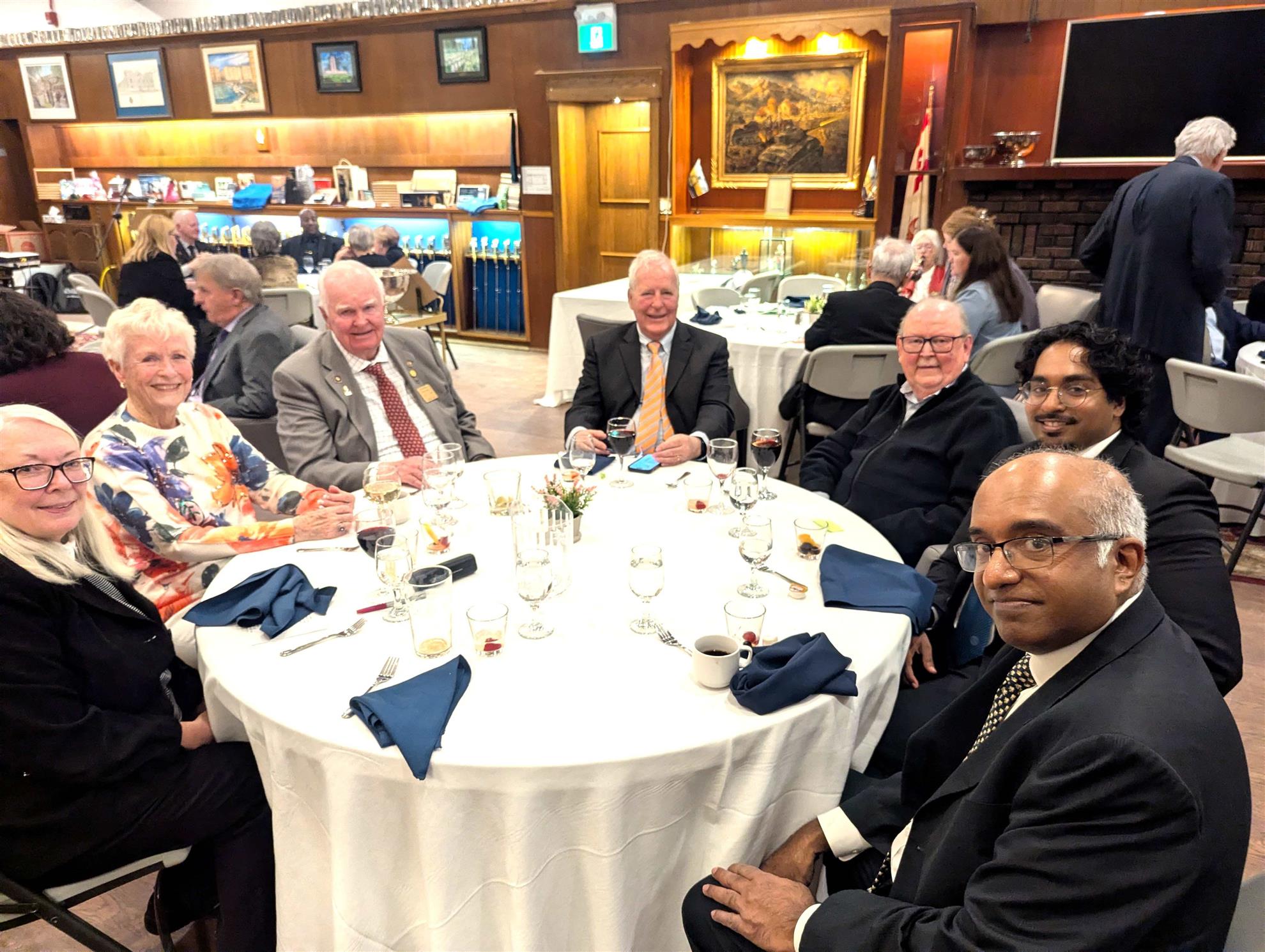
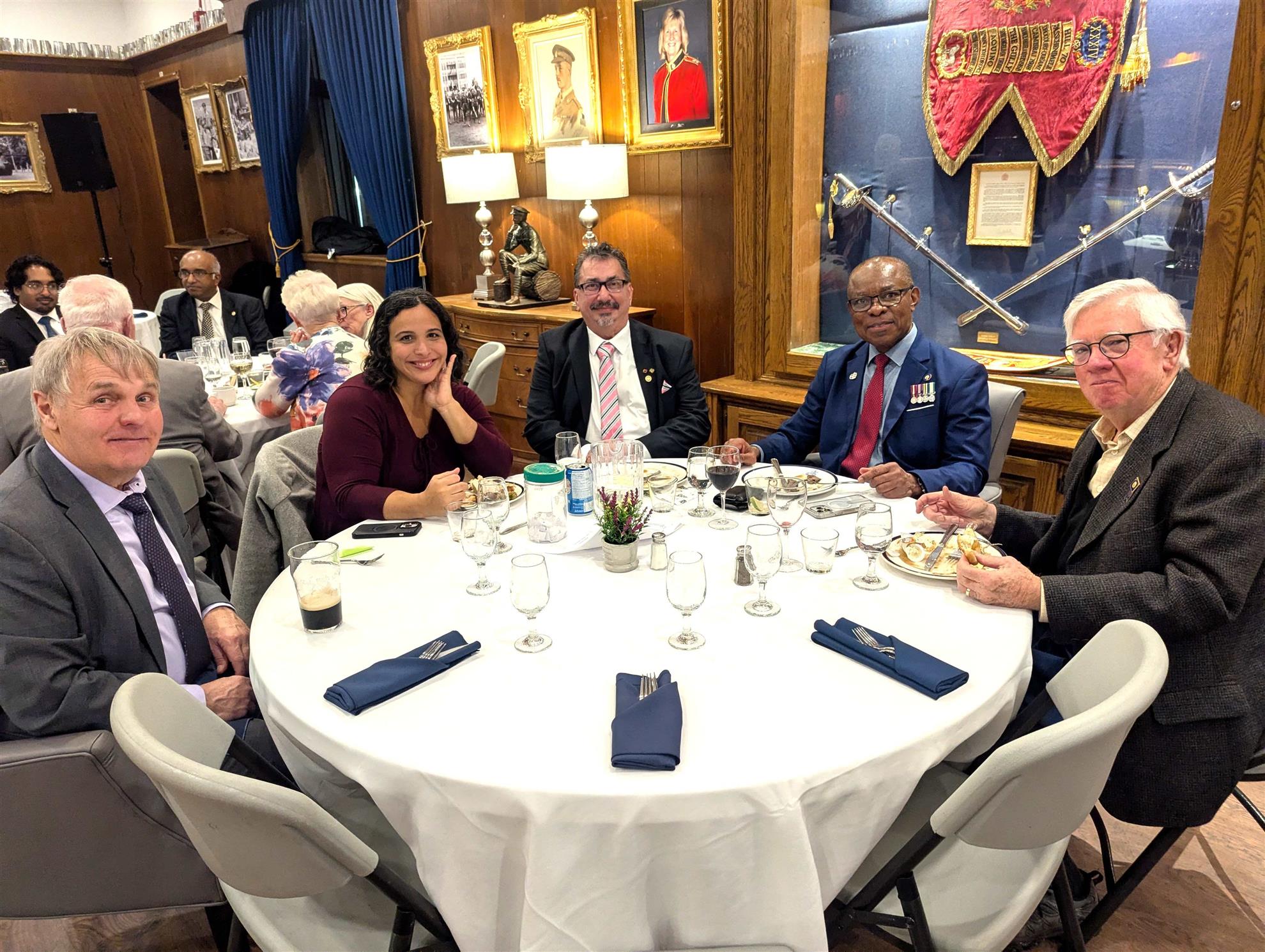
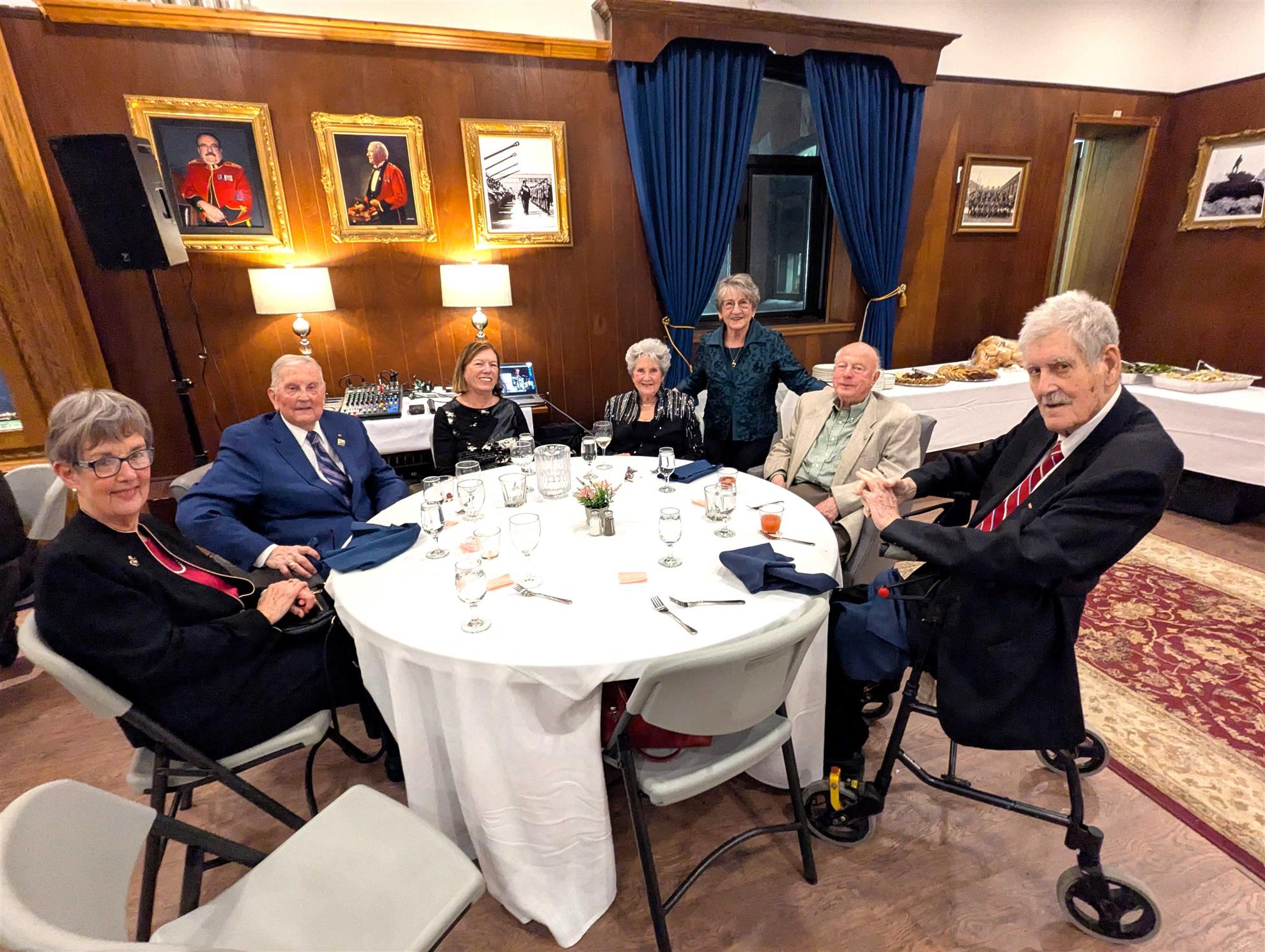
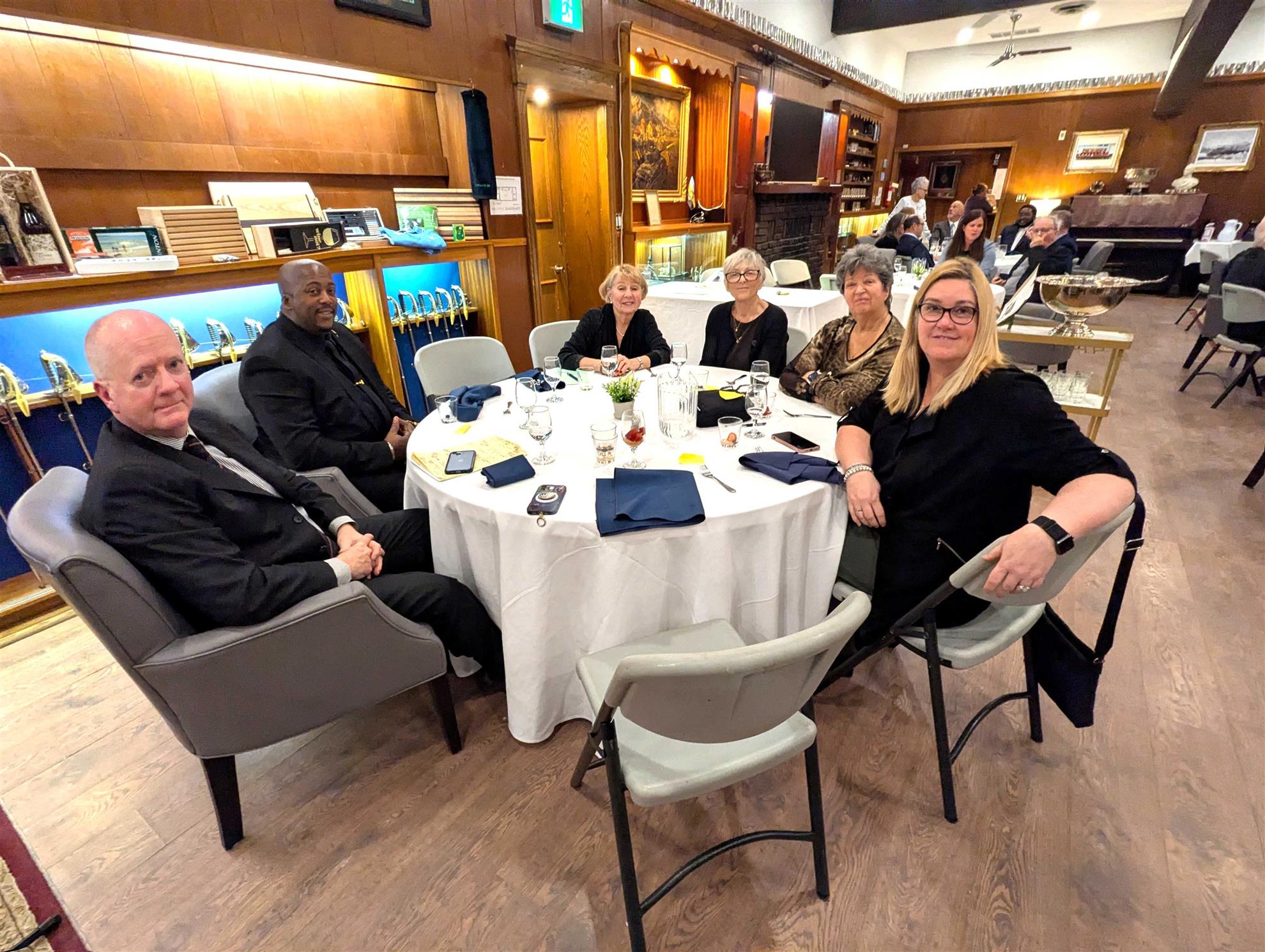
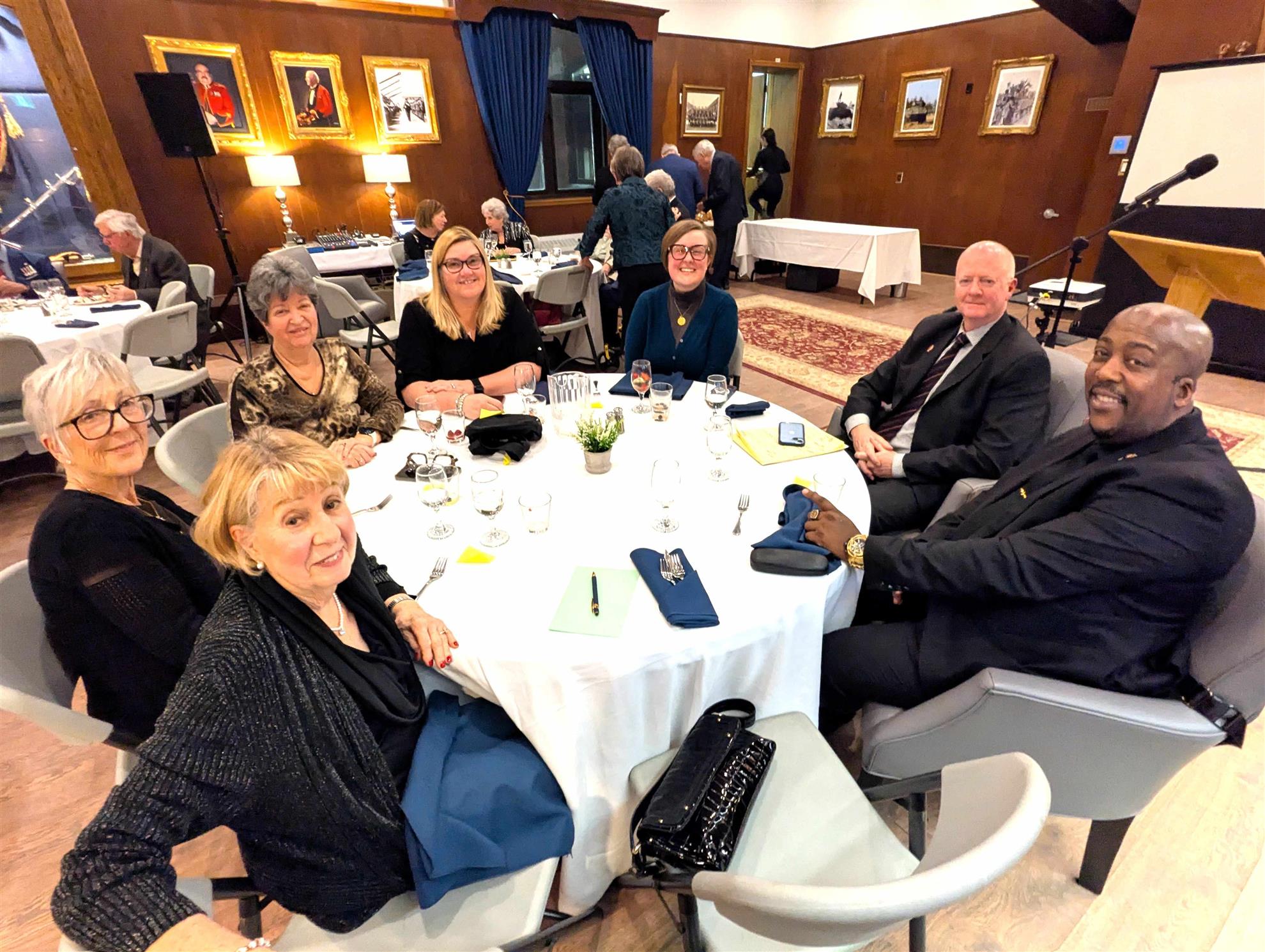
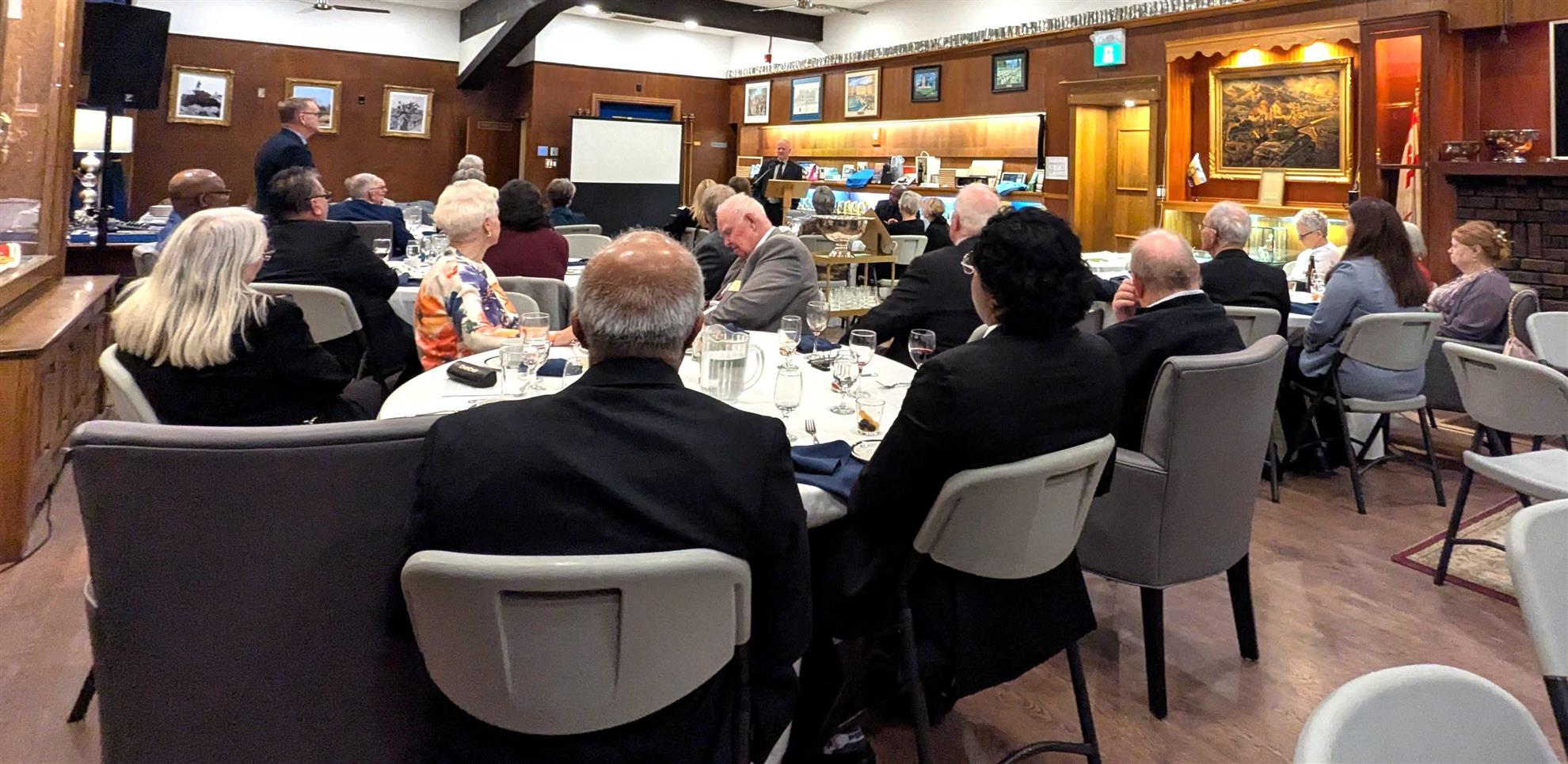
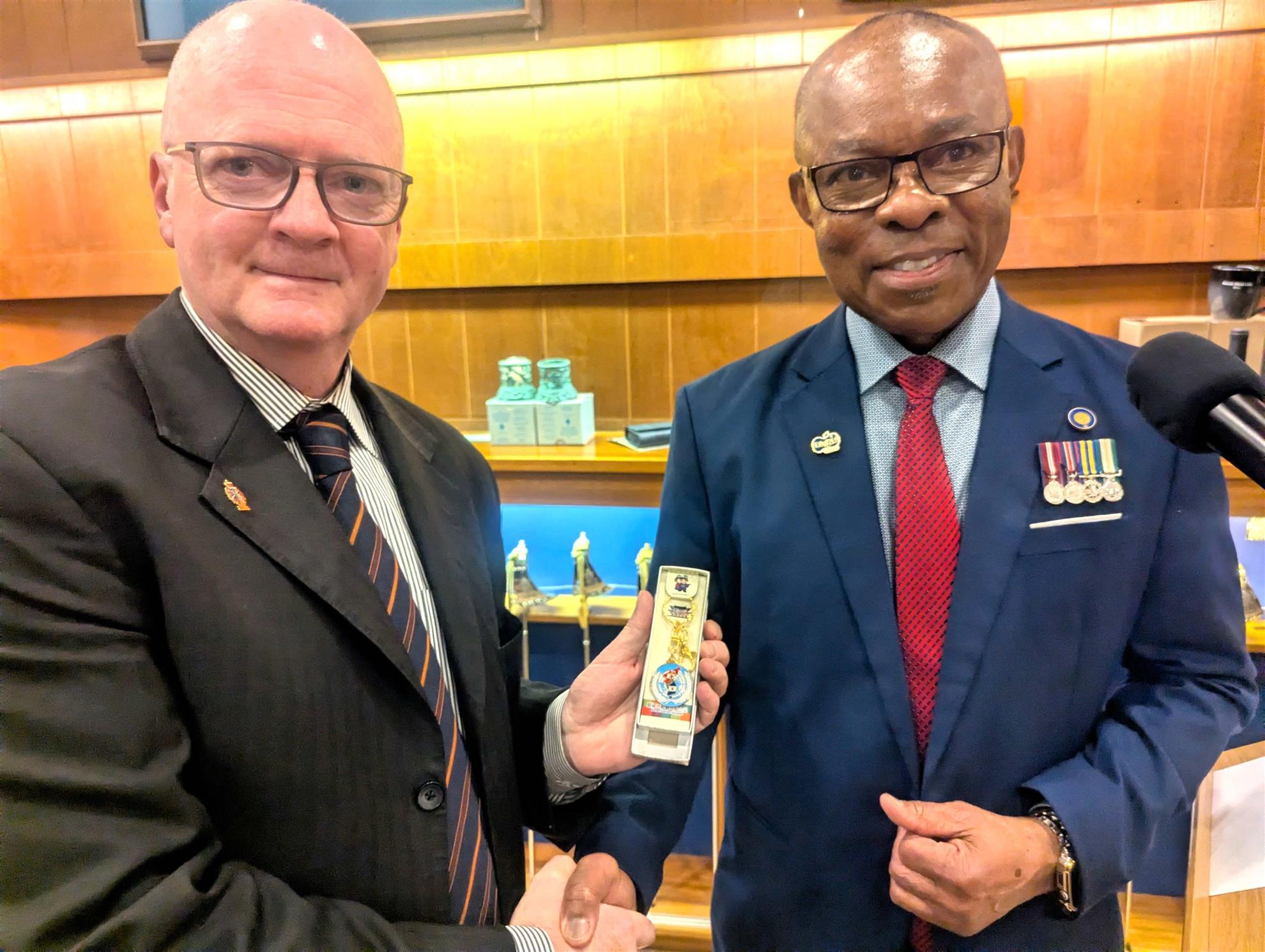
On January 29, 2026: Rotarians and guests from the Rotary Clubs of Oshawa, Oshawa-Parkwood and Whitby-Sunrise were joined by Rotary District 7070 Governor Niecy Dillon -Tyrovolas for a Night of A Thousand Dinners, with proceeds going to the Canadian Landmine Foundation , at the Officers' Mess, Ontario Regiment, Simcoe Street North in Oshawa, Ontario.
This year's keynote speaker was Dr. Alistair D. Edgar, who has served as Chair of the Canadian Landmine Foundation (CLMF) since 2017. He is also the Executive Director of the Academic Council on the United Nations System (ACUNS), and serves as co-director of the Laurier Centre for Military, Strategic and Disarmament Studies (LCMSDS), as well as Associate Professor of Political Science at Wilfrid Laurier University. Dr. Edgar is president of the New Delhi, India-based International Jurist Organization (IJO); and a National Board member of the United Nations Association in Canada (UNAC). Dr. Edgar’s research focuses on transitional justice in war-to-peace transitions and post-conflict peace building. He has conducted fieldwork in Afghanistan, Cambodia, Kosovo, and northern Uganda. Dr. Edgar holds a BA Honours in History from Cambridge University (Sidney Sussex College), a MA in Political Science from the University of British Columbia, and a PhD in Political Science from Queen’s University, Canada. He was the John M. Olin Doctoral Fellow in Economics and National Security at the Olin Institute, Centre for International Affairs, Harvard University, and completed a Certificate in Russian Studies at Moscow State University.
This is an annual Fundraiser for Canadian Landmine Foundation hosted by the Oshawa Rotary Club, chaired by Oshawa Rotarian Gordon Dowsley.
We encourage your Rotary Club to host a Night of a Thousand Dinners. Here's how: https://canadianlandmine.org/?page_id=4272&preview=true
Please join us.See: https://canadianlandmine.org/
In December 1997 the Ottawa Treaty, banning the use of Landmines was signed by 122 countries on Parliament Hill. Since then, a further 40 countries have signed up making the current total 162 independent nations worldwide.
Following the signing of the treaty The Canadian Landmine Foundation was formed and Rotary became an unofficial sponsor as a few board chairs are reserved for Rotarians. Its role is to raise money to remove the mines and to educate children in dangerous areas as to what mines look like, to report them to adults and to never touch them. Many Rotary clubs contribute directly to the Canadian Landmines Foundation from funds on hand. Others raise funds through a Night of A Thousand Dinners evenings and send these funds to the foundation.
Night of a Thousand Dinners (N1KD) is an event that helps to raise awareness of the global landmine crisis and to raise funds for mine action. N1KD began as a global campaign in 2001 and the tradition continues to this day among Rotary Clubs in Canada. Night of a Thousand Dinners is a wonderful opportunity for everyone to make a positive difference in the lives of those living in mine-affected communities, while at the same time sharing a meal with friends and family. Every contribution, no matter how small, will affect change on a global scale.
How are the funds raised for N1KD used?
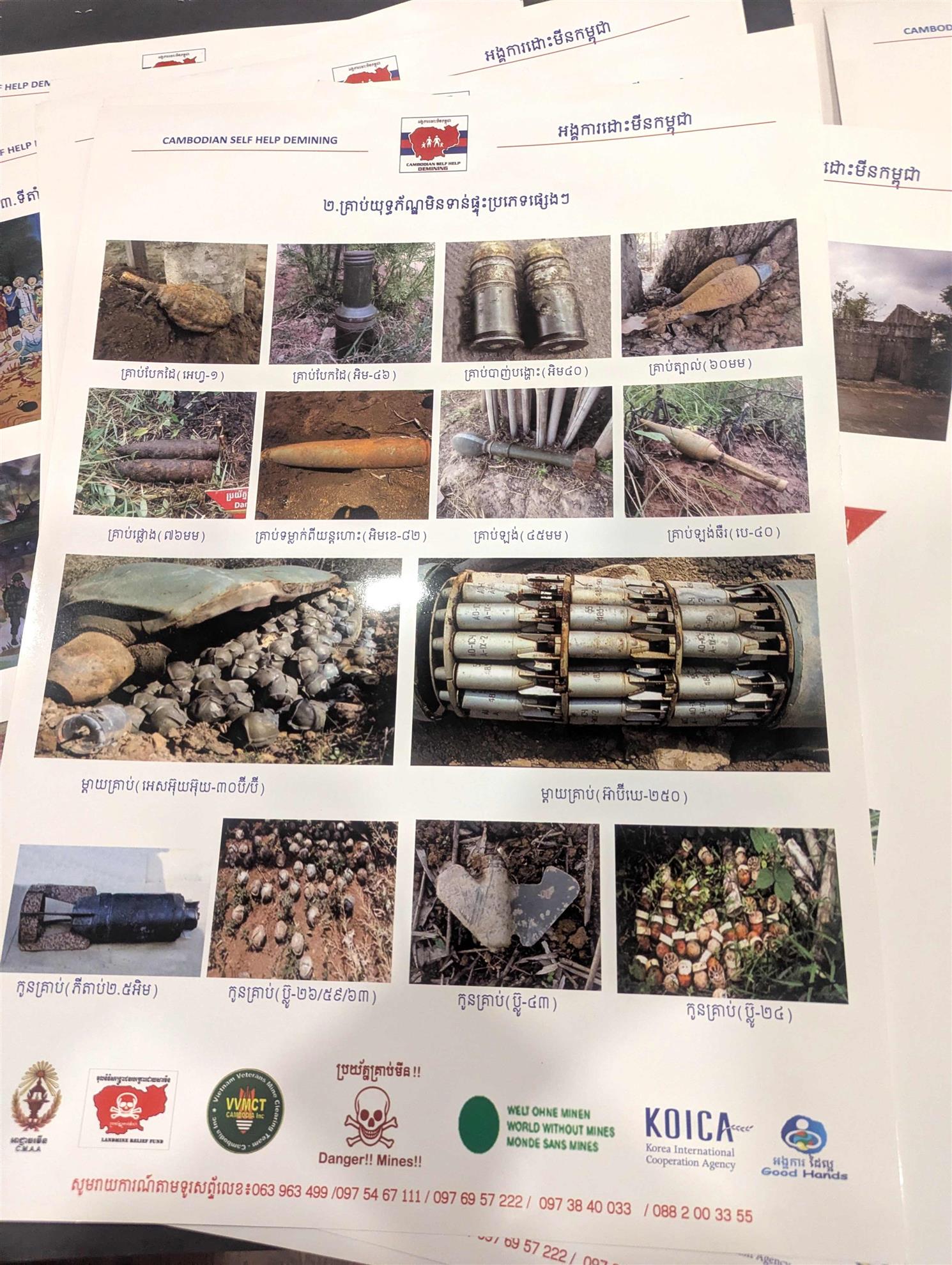
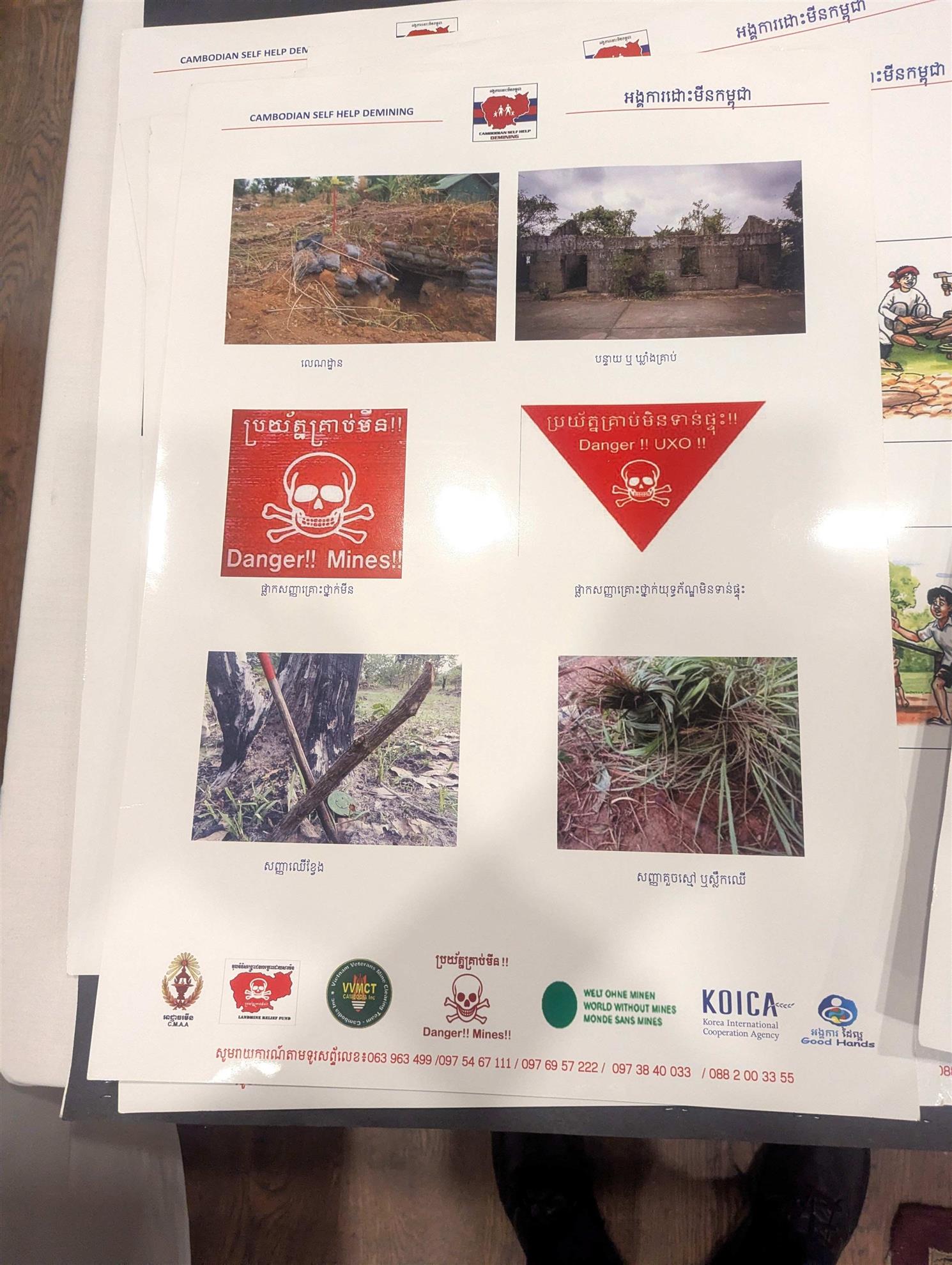
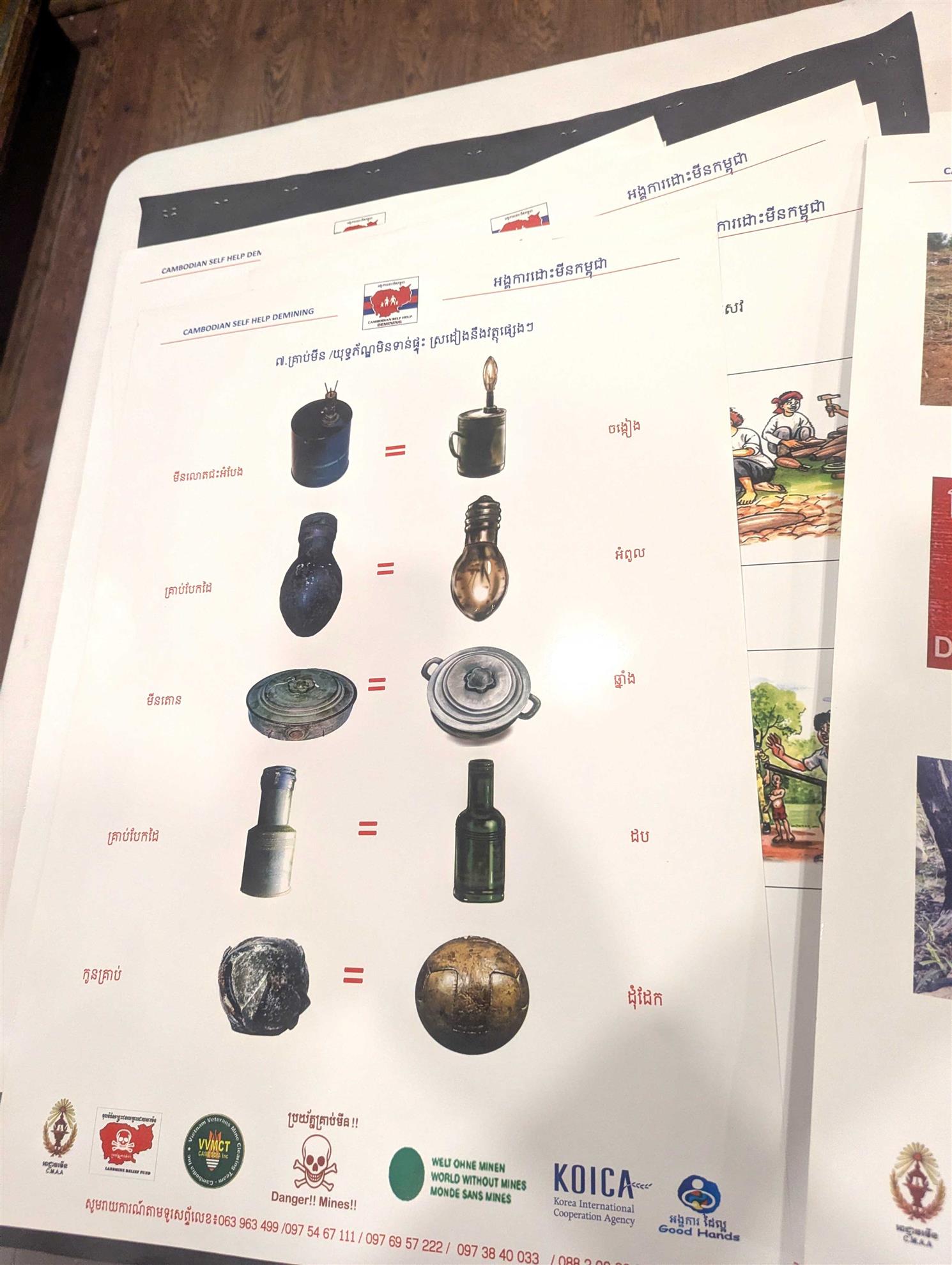
Net proceeds from Night of a Thousand Dinners will be used to fund mine action programs in Cambodia. Our unSAFE campaign supports Cambodian Self Help Demining (CSHD), an organization that operates Explosive Ordnance Disposal (EOD) teams which help rural Cambodians who come across mines and explosive remnants of war in their day-to-day lives. You can read about the unSAFE campaign HERE.
In addition to demining, CSHD’s Risk Education Team travels from village to village teaching people how to identify an explosive and what to do if they find one.
The Canadian Landmine Foundation is a registered charity with a mission to raise awareness and funds to end human and economic suffering caused by landmines. We partner with other charitable organizations that meet our standards and help relieve the global and continued suffering of countries plagued with landmines and their victims.
The Canadian Landmine Foundation (CLMF) aims to realize the vision and goals of the Ottawa Treaty banning anti-personnel landmines by entrenching the norm, now established by 161 governments around the world, and also to meet the challenge of clearing mine-infested lands and to offer hope and practical support to mine victims in the world’s most mine-affected countries/communities. Additionally, we aim to continue raising awareness about the consequences of landmines on the landscape, communities and families of countries around the world. We continue to support organizations that achieve these goals.
Since 1999 the Canadian Landmine Foundation and Canadians across the country have funded $3.7 million in mine action projects around the world, from victim assistance to the clearance of nearly 2 million square metres of land!
In the Photo:

Ottawa, December 5,1997, while the church bells rang out across the city, representatives of 122 countries signed the international landmines treaty.
Nobel Peace Prize laureate, Jody Williams. the President of the International Red Cross, Cornelio Sommaruga, UN Secretary General Kofi Annan and Prime Minister Jean Chretien applaud as Lloyd Axworthy, signs for Canada
ROTARY AND THE CANADIAN LANDMINE FOUNDATION:
Rotarians and Rotary clubs have been involved with the eradication of Landmines since the passing of The Ottawa Treaty in 1997.
Why? It falls right into so many of Rotary’s Areas of Focus - first and foremost is Peace Building and Conflict Prevention; and when the landmines are gone, Rotarians can focus on community and economic development; disease prevention & treatment, Water, sanitation and hygiene and the rest of the Rotary Areas of Focus.
Since its creation, in 1999, Rotarians have served on the Canadian Landmine Foundation’s Board of Directors. Dr. John Frid, a Rotarian from Hamilton (Hamilton) was on the Foundation’s inaugural Board of Directors. Rotarians Herb Epp (Kitchener), and Chris Snyder (Toronto)—have served as the organization’s Chair, and Scott Fairweather (Toronto Forest Hill) was the Foundation’s President and CEO from 2003-2009.
Past District Governors Rosemary Barker-Aaragon (5030) and Richard Clarke (7070) have been on the board , as well as past Rotary International President Wilf Wilkinson (Trenton) and former Rotarian John English (an honourary member of the Kitchener Club and a two time Paul Harris Fellow). The current Foundation’s Board of Directors include Rotarians Gordon Dowsley (Oshawa), Bob Butterill (Toronto Sunrise), our Past District Governor Ron Dick from Oshawa and Patti Lee of the Toronto West Rotary Club .
With the support of Sandy Boucher (Toronto) and Richard Clarke (Parkdale-High Park-Humber), Rotarians for Mine Action, once a Rotary Fellowship, became one of the inaugural Rotary Action Groups in 2005 at the Rotary International Convention in Chicago.
As part of Canada’s 150th Anniversary Celebrations, Past President of Rotary International, Wilf Wilkinson, challenged all Rotarians in Canada, to renew our commitment to eliminate these terrible weapons.
Rotarians and Rotary Clubs have always been two of the largest financial contributors to the Canadian Landmine Foundation. Over the years, 122 Clubs in 18 Districts, coast to coast to coast, have contributed more than $260,000 to Canadian Landmine Foundation programs. The funds went to projects that cleared mines and assisted survivors in places like Bosnia, Colombia, Croatia, Ethiopia, Lebanon, Mozambique, Nicaragua, Peru, Sri Lanka, Uganda, Vietnam and today in Cambodia.
One of the Canadian Landmine Foundation’s many projects is the unSAFE campaign, as it is called, which raises funds for Cambodian Self Help Demining, which operates explosive ordnance risk education (EORE) and explosive ordnance disposal (EOD) teams that help rural Cambodians, who come across mines and explosive remnants of war, in their day-to-day lives.
At the height of the Night of 1000 Dinners campaign, ….. over 90% of all Rotary Districts in Canada were holding N1KD events!
What is Night of A Thousand Dinners?
Night of a Thousand Dinners (N1KD) is an event, just like we HAD ON JANUARY 29 that helps to raise awareness of the global landmine crisis and to raise funds for mine action. They began as a global campaign in 2001 and the tradition continues, to this day, among Rotary Clubs in Canada. These dinners are a wonderful opportunity for everyone to make a positive difference in the lives of those living in mine-affected communities, while at the same time, sharing a meal with our Rotary friends and guests. Instead of guests bringing wine, flowers, or dessert, to a dinner event, they make a donation to the Canadian Landmine Foundation. Every contribution, no matter how small, will affect change and impact , on a global scale. When a thousand Rotarians and guests come together, across Canada, have dinner and support the Canadian Landmine Foundation, it is called A Night of A Thousand Dinners. Net proceeds from our Night of a Thousand Dinners will be used to fund mine action programs in Cambodia, which help rural Cambodians, who come across mines and explosive remnants of war, in their daily lives.
The Ottawa Treaty: In October 1996, there was a conference on the global landmine crisis, held in Ottawa, Canada. At the conference, Canadian Foreign Affairs Minister Lloyd Axworthy, (a Rotarian in Winnipeg), challenged a delegation of 50 governments and 24 observers to bring about an international ban on landmines. And as they say, The rest is history.
On December 3, 1997, The Ottawa Treaty or the Mine Ban Treaty, formally called the Convention on the Prohibition of the Use, Stockpiling, Production and Transfer of Anti-Personnel Mines and on their Destruction was adopted, And entered into force on March 1, 1999. It bans completely all anti-personnel landmines (AP-mines) around the world. To date, there are 162 countries who have signed the treaty.
The Ottawa Treaty represents a landmark achievement in international humanitarian law, emphasizing the importance of collaboration between nations and civil society to address the devastating impact of landmines on civilian populations.
The video that was shown on January 29, took place in October 2016 in Toronto. It really tells the story of how the world came together to start the demining process worldwide. The event was called: The Ottawa Process Twenty Years Later: The Landmine Treaty, Human Security, and Canada in the Twenty-First Century. Delegates, came together to re-affirm their commitment to the eradication of land mines in the world.
Here is the link to the video: https://vimeo.com/190510668
PHOTOS FROM THE ROTARY CLUB OF OSHAWA'S NIGHT OF A THOUSAND DINNERS: